AI now makes room images in minutes. Here's what that changes for interior designers, with BLS job data, designer surveys and real examples of AI mistakes.
- ✓ AI automates one part of the job, the picture of the finished room, and does it in minutes. Most of what designers do happens after the picture: planning, specifying, budgeting, ordering and coordinating.
- ✓ The US Bureau of Labor Statistics projects interior design jobs to grow 3% from 2025 to 2035, with about 7,700 openings a year.
- ✓ Designers are adopting AI for visuals and admin. What changes is the early concept stage, which gets faster and cheaper, for designers and for homeowners doing it themselves.
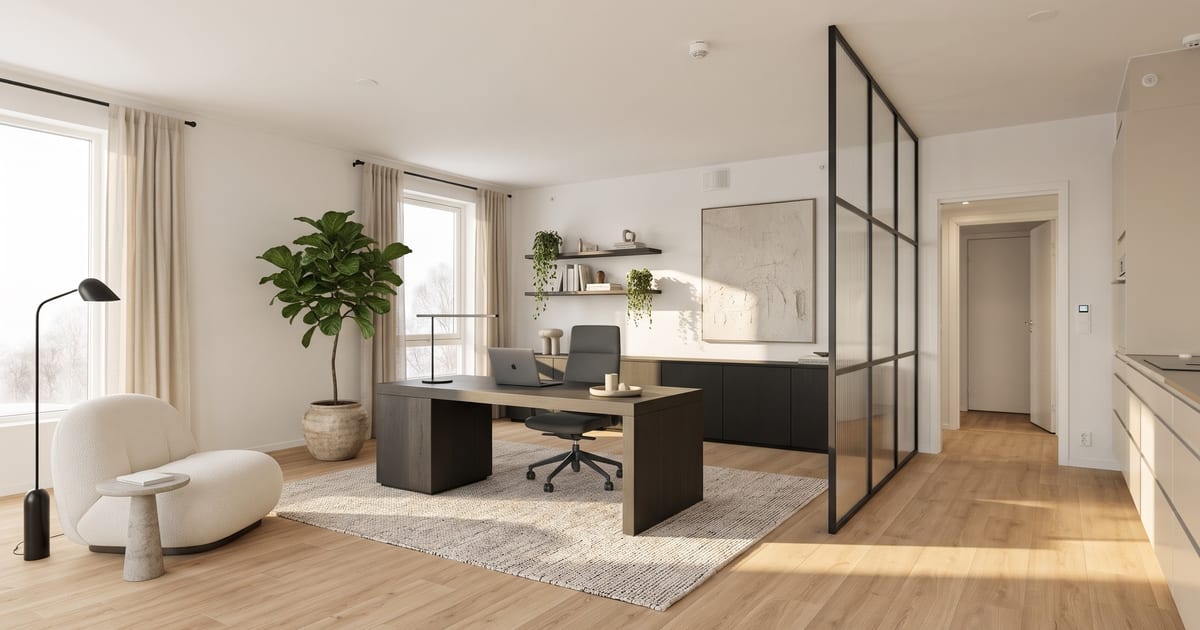
A note before we start: Tigmi makes an AI interior design tool, so we have a stake in this question. We’ve tried to answer it with outside numbers and with our own tool’s mistakes.
AI can now take a photo of a room and return a convincing redesign in a couple of minutes. If interior design were only that picture, the question would be easy. It isn’t, and the short answer is: AI replaces part of the work, not the job. Here is which part, and what the numbers say.
What interior designers actually do
The US Bureau of Labor Statistics lists the typical duties of an interior designer (BLS). Here they are, with what AI does for each today:
| What designers do (BLS) | What AI does today |
|---|---|
| Find and bid on projects | Helps write proposals and posts |
| Determine the client’s goals and requirements | Nothing on its own: that’s a conversation |
| Consider how the space will be used and how people move through it | Little: images aren’t to scale |
| Sketch preliminary plans, including electrical and partition layouts | Concept images, not plans |
| Specify materials and furnishings | Suggests looks, not real, available products |
| Create a timeline and estimate costs | No |
| Place orders and oversee installation | No |
| Oversee construction and coordinate with contractors | No |
| Visit the site afterward to confirm the client is satisfied | No |
AI is strong in one row and a half. That row matters, because the concept stage is where clients decide, but it’s a small share of the hours on a real project.
What the job numbers say
The BLS figures for the US:
- 97,100 jobs in 2025.
- Median pay of $67,190 a year in May 2025.
- 3% projected growth from 2025 to 2035, “about as fast as the average for all occupations”.
- About 7,700 openings a year, many of them to replace people who retire or move to other jobs.
That projection is not a forecast of AI’s impact in particular, and projections can be wrong. But it isn’t the profile of a job expected to disappear.
Some states also restrict the work or the title: in some, only licensed designers may do interior design work; in others, only licensed designers may call themselves interior designers. Where the title is restricted, candidates must pass a state-approved exam, which requires at least a bachelor’s degree in interior design and two years of full-time experience. An image generator can’t hold a license, sign off on a plan or carry responsibility for it.
Designers are already using AI, mostly for the picture and the paperwork
Two 2025 surveys:
- Houzz surveyed 722 design and construction firms: 31% of designers used AI. Of those, 70% used it for admin such as emails and summaries, 59% for sales and marketing, and 34% for design work, “mostly early-stage visuals and mood boards” (Business of Home).
- Mattoboard surveyed 328 design professionals in more than 70 countries: 82% said they use AI regularly. The top uses were visualization (62%), concepting (58%) and mood boards (52%); the least common were material sourcing (35%), client communication (30%) and project management (22%). 54% worried about homogeneous, less original design (Office Insight).
Both companies sell design software and recruited through their own networks, which is why the numbers are so far apart (31% and 82%). Both point the same way: AI lands at the start of a project, and the parts of the job that involve suppliers, budgets and people barely use it.
Where AI gets it wrong: our own examples
AI room images look finished, which is exactly why they need a professional eye. Three things our own tool did on real photos:
In an empty room next to a kitchen, the AI furnished an office and added a steel-and-glass partition to separate it. It’s a good idea, and it’s a building job with a contractor and possibly a permit, not furniture.
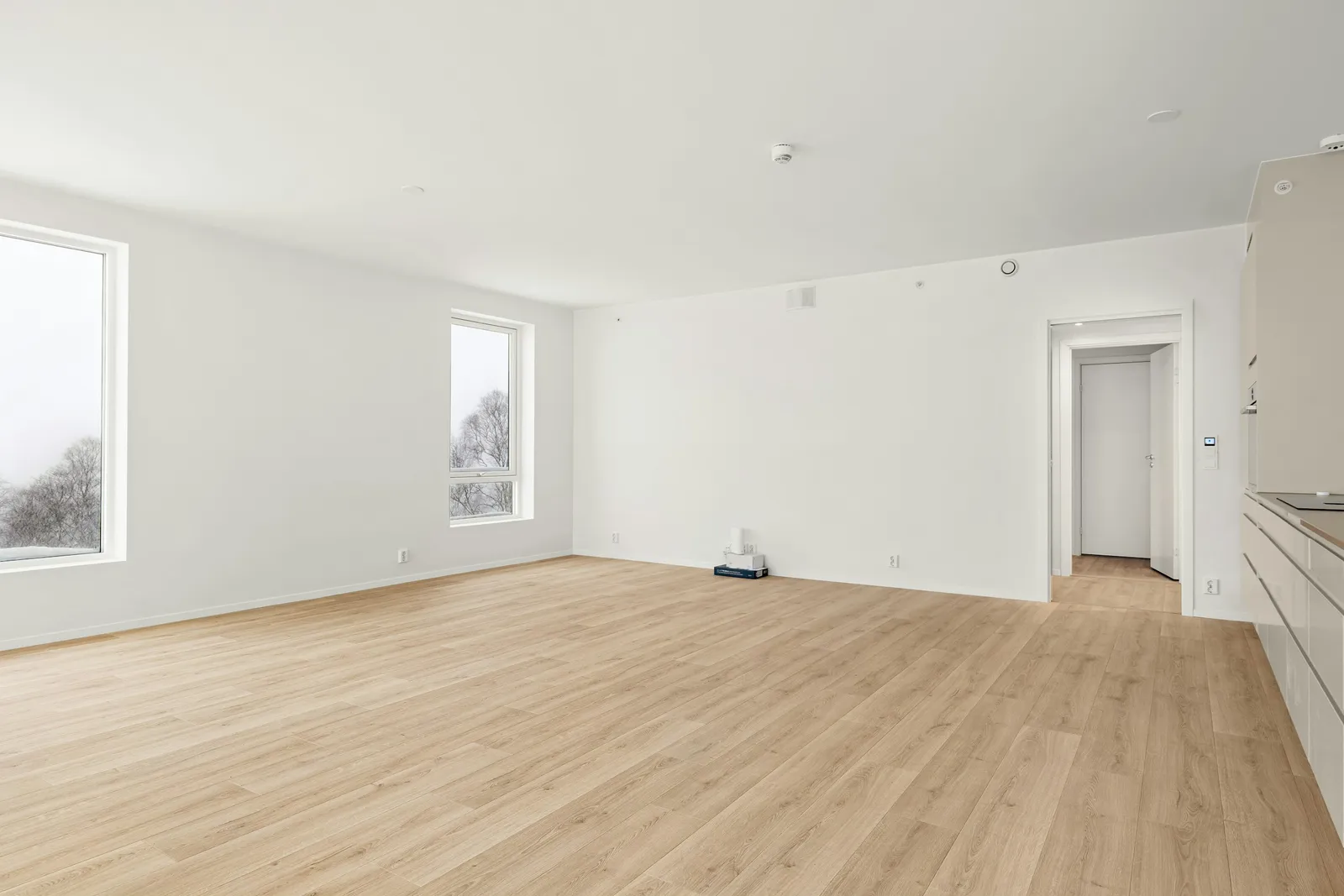
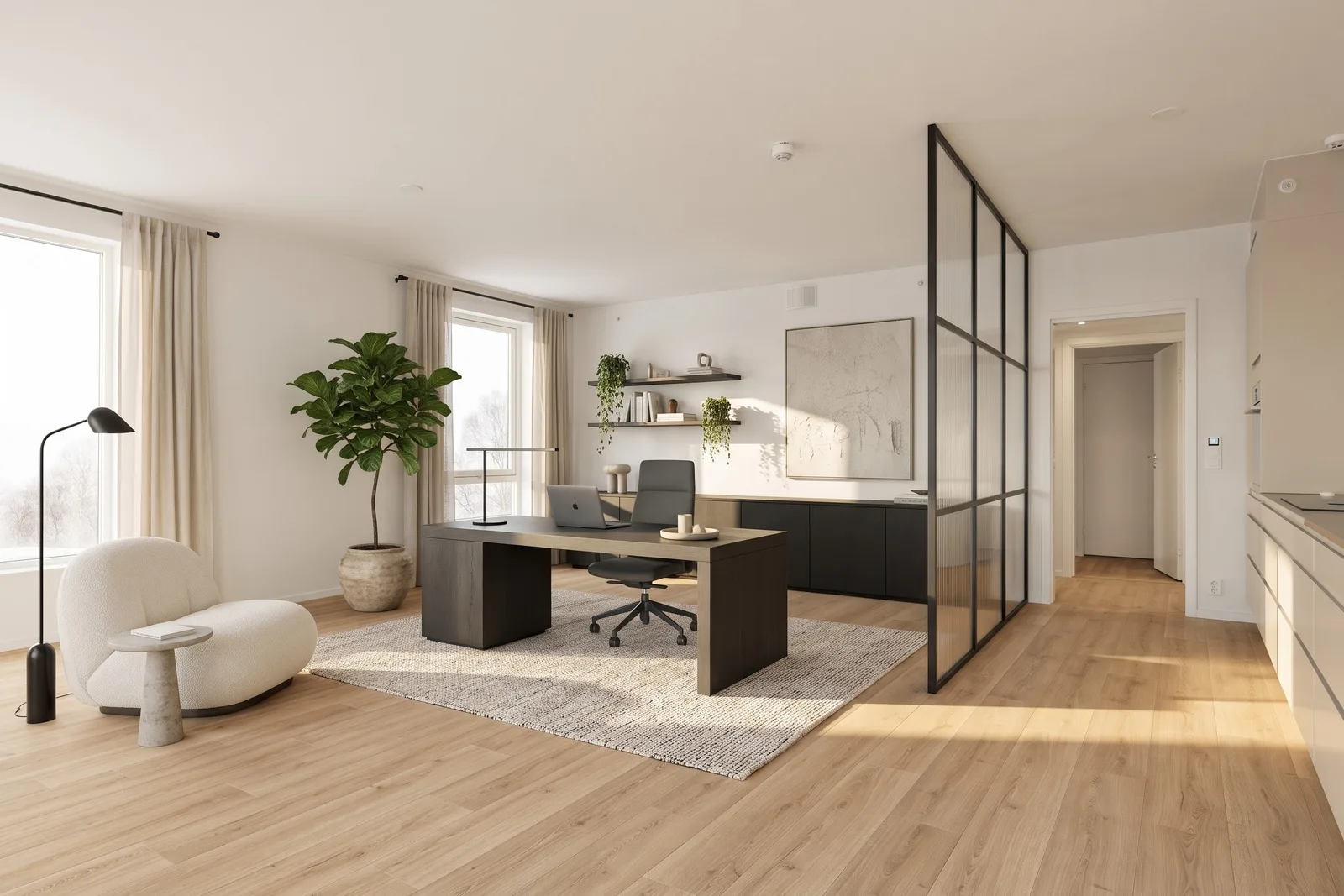
Photo: Lisa Anna on Unsplash. Furnished with Tigmi (Minimal Contemporary style, paid-plan settings), not retouched.
In a small kitchen, it kept the window and the stove, and added a sink under the window, which in real life means moving plumbing. And in a living room whose curtains hid the walls, it invented the windows behind them. You can see both on our kitchen and living room pages.
A homeowner can catch some of this. A designer catches it as a habit, along with what the image never shows: the clearance in front of a toilet, the walkway between counters, whether the sofa fits through the door.
So what actually changes?
For designers, the concept stage gets faster. Several directions on the client’s own photo in an afternoon, instead of one sketch in a week. The time goes back into the parts clients pay for and AI can’t do: layout, specification, sourcing, budgets and coordination. The risk the Mattoboard respondents named is real too: if everyone uses the same tools, rooms start to look alike, and a designer’s own point of view becomes worth more.
For homeowners, small refreshes get easier to do alone. For a new rug, a paint color and a few pieces, an AI redesign plus a tape measure goes a long way. For a renovation that moves plumbing, removes walls or runs a budget of tens of thousands, the image is a great brief to bring to a professional, not a replacement for one. Our guide to planning a remodel with AI shows how to read an AI image like a contractor.
Try it
If you’re a designer, try it on a client photo; if you’re a homeowner, on your own room. Tigmi redesigns a photo in one of 16 styles in a couple of minutes, and your first redesign each month is free. See also how to use AI for interior design and our comparison of AI interior design software.
Tigmi Team
Product & EditorialThe people who build Tigmi, an AI tool that redesigns real rooms from a single photo. We write about what we learn testing styles, prompts and room photos every day.
Frequently Asked Questions
Will AI replace interior designers?
Not as a job, on current evidence. AI generates convincing room images, but designers also plan how a space works, specify materials, estimate costs, order, coordinate contractors and, in some US states, hold a license. The BLS projects 3% job growth from 2025 to 2035.
What can AI do in interior design today?
Redesign a photo of a room in a style, furnish an empty room, generate mood boards and palettes, write lists and emails. In designer surveys, the most common uses are visualization, concepting and mood boards, plus admin and marketing.
What can't AI do in interior design?
Measure, check what's buildable, price the work, find exact products, deal with suppliers and contractors, or judge how a family will actually use a room. AI images also contain mistakes, such as fixtures added or windows invented, that someone has to catch.
Do interior designers use AI?
A growing share do. In a 2025 Houzz survey of 722 firms, 31% of designers used AI; in Mattoboard's 2025 survey of 328 design professionals, 82% said they use it regularly. Both companies sell design tools, so the figures lean optimistic.
Is interior design still a good career?
The BLS counted 97,100 interior design jobs in 2025, with a median pay of $67,190 and about 7,700 openings a year projected over the next decade. The skills that matter more with AI are the ones it can't do: space planning, specification, budgets and client judgment.
Ready to see your room reimagined?
Upload a photo of your room and get a photorealistic redesign in a couple of minutes. Your first redesign each month is free.