What Japandi really is, the palette, materials and furniture that make it work, room-by-room advice, and the mistakes that make it feel cold or empty.
- ✓ Japandi blends Japanese restraint with Scandinavian comfort: few pieces, natural materials, warm neutrals.
- ✓ Warmth comes from texture and wood, not from more objects. Mix a light wood with one darker one.
- ✓ The most common mistake is going cold: grey instead of warm white, and bare instead of calm.
Japandi is one of the most requested styles for a reason: it promises calm without feeling bare. It’s also one of the easiest to get slightly wrong. Done well, a Japandi room feels warm, quiet and lived in. Done badly, it feels like a beige waiting room. This guide is about the difference.
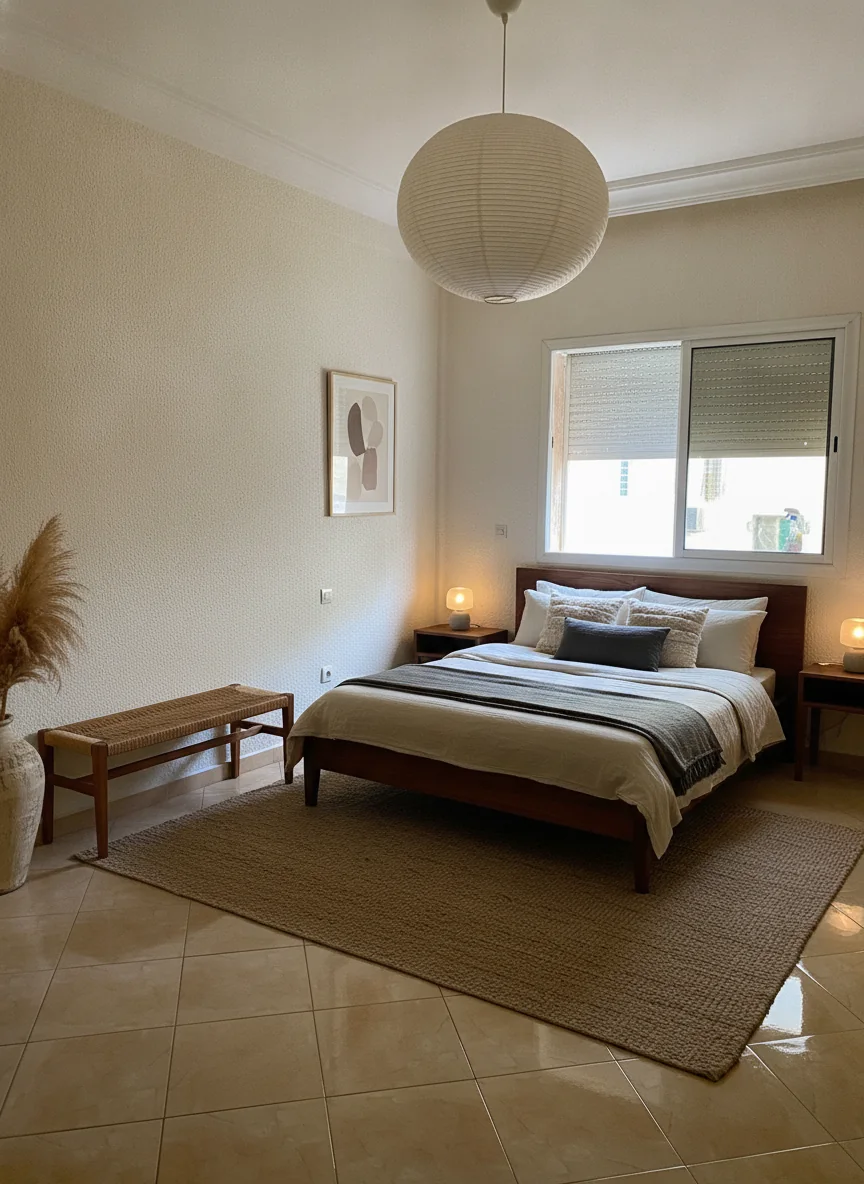 An empty bedroom redesigned with Tigmi’s Japandi Calm style: a wooden bed, a paper lantern, a low bench, a jute rug and linen. The window and floor are the room’s own.
What Japandi is (and isn’t)
Japandi borrows from two traditions that share a respect for simplicity and craft:
- From Japan: restraint, low furniture, natural and imperfect materials, the idea that empty space is part of the design (ma), and the appreciation of the worn and handmade (wabi-sabi).
- From Scandinavia: comfort, function, light woods, soft textiles and the warmth of hygge.
It is not minimalism with a new name. Strict minimalism removes; Japandi edits and then adds texture back. It’s also not “Asian decor”: no bamboo screens, no fans on the wall.
The palette
Start warm and stay narrow:
| Role | Colors |
|---|---|
| Walls and large surfaces | Warm white, ivory, light oatmeal |
| Main furniture and textiles | Sand, greige, flax, stone |
| Depth | Clay, mushroom, soft brown |
| Contrast, used sparingly | Charcoal, black, dark walnut |
Test whites on your own walls before committing. A white with a yellow or pink undertone keeps the room warm; a blue-leaning white turns it cold, especially in north-facing rooms. A limewash or matte plaster finish adds the soft variation that flat paint can’t.
Materials do the work
Because there are few objects, every surface counts.
- Wood: combine a light species (oak, ash, beech) with one darker accent (walnut, smoked oak). Two woods look intentional; five look accidental.
- Textiles: linen, wool, cotton gauze, and maybe one bouclé or chunky knit.
- Natural fibers: paper lanterns, rattan, cane, jute rugs.
- Hand-made pieces: stoneware, unglazed ceramics, a wooden bowl. Odd numbers and uneven heights look more natural.
- Avoid: high-gloss surfaces, chrome, plastic, and printed “zen” quotes.
Furniture: low, solid, few
Choose pieces that sit lower than usual and look grounded: a low sofa with a wooden frame, a platform bed, a coffee table with chunky legs, a long low console instead of a tall unit. Rounded edges soften the room. Buy fewer, better things, and leave space between them.
Room by room
Living room. A low sofa in linen or a textured weave, a wool or jute rug large enough for the front legs of the seating to sit on it, one sculptural floor lamp or paper lantern, and a low media unit that hides cables. One large plant (an olive tree or a fiddle-leaf fig) beats five small ones.
Bedroom. A platform bed in light wood, layered linen bedding in two or three neutral tones, wall lights or small lamps at reading height, and nothing on the floor. A bench at the foot of the bed holds the throw and keeps chairs from becoming wardrobes.
Kitchen. Flat-front cabinets in light wood or matte warm white, a stone or stone-look worktop, open shelving only for a few things you use daily, and ceramic tableware on show.
Entryway. A low bench, a few hooks, a basket for shoes, a round mirror. Calm starts at the door.
Light
Warm (2700K) bulbs, always. Combine a soft overall light, like a paper pendant, with lamps at different heights. Diffused light suits the style; bare spotlights and cold LED strips fight it. During the day, sheer linen curtains filter light without blocking it.
Mistakes that ruin Japandi
- Going cold. Grey walls, cool LEDs and no texture. Fix: warm white, linen, wood, warm bulbs.
- Too empty. Calm is not bare. Keep a few meaningful objects, a plant and soft textiles.
- Matching everything. A set of identical furniture in one wood looks like a showroom. Mix woods and handmade pieces.
- Clutter hidden badly. Japandi needs real storage: closed cabinets, baskets, a drawer for cables and chargers.
- Theme decor. Buddha statues, bamboo wallpaper and kanji prints are a cliché, not the style.
Try it on your room before you buy
Japandi depends on proportion and warmth, which are hard to judge in a shop. With Tigmi, upload a photo of your room and choose the Japandi Calm style. In a couple of minutes you’ll see your room, with its own walls, windows and light, redesigned in the style. Add notes like “keep my oak floor” or “warmer whites, more linen” to steer it.
When you like a result, Shop the Look (on paid plans) picks out the pieces in the image, the lantern, the low bench, the bedding, and finds similar products you can buy from real stores in 45 countries. It’s the quickest way to go from “I like this” to a shopping list that fits your room. The first redesign each month is free.
Related: Japandi style in our glossary, and our guide to writing prompts for room redesigns.
Tigmi Team
Product & EditorialThe people who build Tigmi, an AI tool that redesigns real rooms from a single photo. We write about what we learn testing styles, prompts and room photos every day.
Frequently Asked Questions
What colors are Japandi?
Warm whites, oatmeal, sand, greige and clay, with charcoal or black as a quiet contrast. Avoid cool greys and bright white, which make the style feel clinical.
What is the difference between Japandi and Scandinavian?
Scandinavian is lighter and cozier, with pale woods, white walls and more textiles. Japandi is calmer and more pared back, uses lower furniture and adds darker woods and handmade pieces from the Japanese side.
Can Japandi work in a small apartment?
Very well. Low furniture, few objects and hidden storage make a small room feel larger. Choose pieces on legs where you can, and keep the floor clear.
Is Japandi expensive?
It doesn't have to be. Start with what costs least and changes most: warm white paint, linen curtains, a paper lantern, and removing half your accessories.
Ready to see your room reimagined?
Upload a photo of your room and get a photorealistic redesign in a couple of minutes. Your first redesign each month is free.